Prima si mangia, poi si litiga: la Ganzega apre le Vigiliane del 2026

Sabato 13 giugno, Piazza Duomo. Ciusi e Gobj alla stessa tavolata. Perché a Trento la rivalità è una cosa seria, e proprio per questo si celebra con la forchetta in mano.
Ci sono città che le loro faide se le tengono molto strette, le coltivano, le tramandano con rancore. Trento no. Trento ha trovato una soluzione più elegante: prima di sfidarsi, i nemici si siedono a cena insieme. Si chiama Ganzega dei Ciusi e dei Gobj, torna sabato 13 giugno, ed è la cena collettiva di Piazza Duomo: oltre mille commensali ogni anno, l'anteprima non scritta ma puntualissima delle celebrazioni vigiliane.
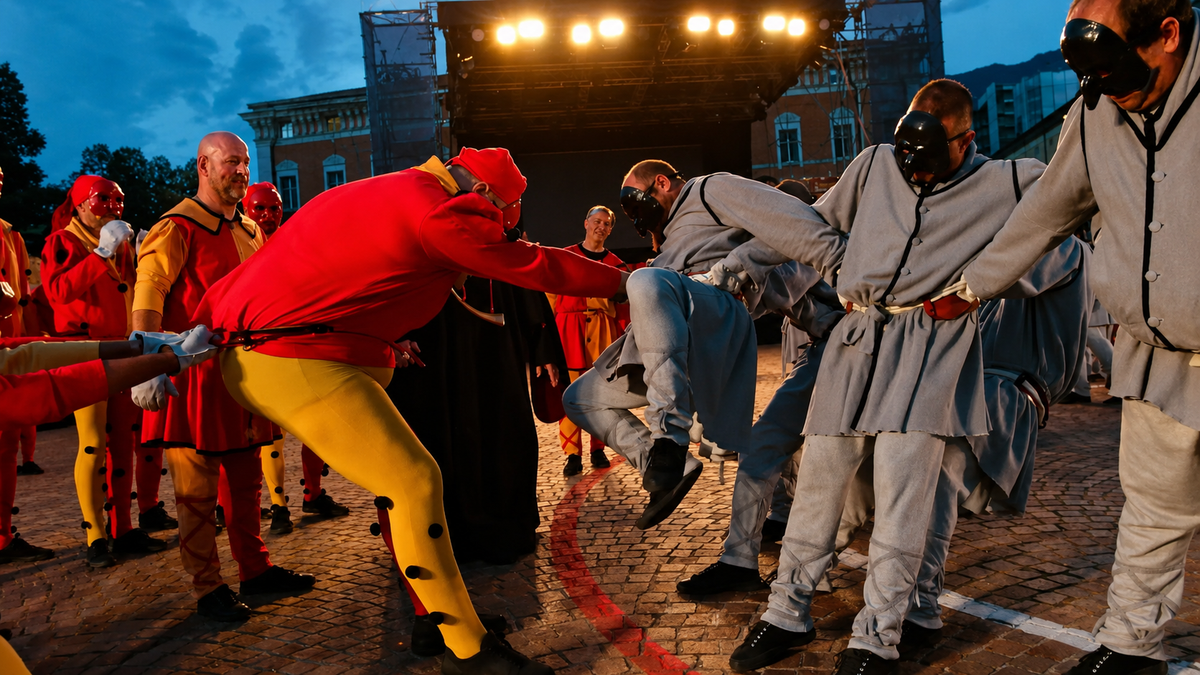
Il meccanismo è semplice e geniale. Una tavolata lunghissima attraversa la piazza e tiene insieme le due fazioni della disfida: da una parte i Ciusi, dall'altra i Gobj, in mezzo polenta, vino e la consapevolezza che il conflitto può aspettare. Lo spirito, per una sera, non è quello della contesa: è quello della tavola. La sfida arriverà dopo, a fine mese, con tutto il suo apparato di farina e onore.
Per ora si mangia.
E si mangia sul serio. Niente rivisitazioni: le ricette vengono da vecchi manoscritti, le materie prime da campi e stalle del Trentino. Le farine arrivano da Agri90 e finiscono nei paioli dei Polentèr, (colui che cucina e serve la polenta) affiancati dalla Proloco di Storo; il pane è il Pantrentino dell'Associazione Panificatori della provincia di Trento. Chi vuole la versione vegetariana la chiede al proprio cameriere, Ciuso o Gobo che sia. Lo chef stellato non c'è e non manca a nessuno.
C'è un dettaglio che non guasta: parte del ricavato andrà, come ogni anno, a un'associazione del territorio, secondo il motto della serata, «divertirsi divertendo». Tradotto: anche il bicchiere di troppo fa del bene a qualcuno.
La Ganzega è l'antipasto. Il piatto forte arriva sei giorni dopo, ed è abbondante. Le Feste Vigiliane tornano dal 19 al 26 giugno per la 43ª edizione: una settimana in cui il centro storico diventa un maestoso palcoscenico e la città mescola, senza il minimo imbarazzo, processioni e satira di piazza, fede e fuochi d'artificio. Domenica 21 giugno tocca al Palio dell'Oca sulle acque dell'Adige e alla Tonca, il rito che rispolvera un'antica pena d'acqua e ricorda ai potenti locali che il fiume è democratico. Il 25 giugno il Duomo ospiterà «Dopo la notte», il dramma in atto unico dedicato a San Vigilio; il 26 sarà il giorno del Pontificale solenne e della distribuzione del Pan e Vin. E poi il gran finale: la Disfida dei Ciusi e dei Gobj, prima dei Fuochi di San Vigilio, che la città spara da oltre cinque secoli.
Dietro a tutto questo non c'è una macchina del divertimento calata dall'alto. Come ricorda Marco Lazzeri, presidente della ProLoco Centro Storico, le Vigiliane stanno in piedi grazie a centinaia di volontari, gli stessi che ogni anno tengono accese tradizioni cucite addosso all'identità della città. Gente che monta tavoli, cucina polenta e serve mille coperti senza vedere un euro. Provateci voi, a trovare un catering così.
Una nota pratica per i ritardatari cronici: la vendita dei biglietti è già attiva — online sui canali ufficiali delle Feste Vigiliane oppure all'Infopoint di Piazza Duomo — e restano circa 150 posti. Centocinquanta su mille. Fate i vostri calcoli.
Perché alla fine la Ganzega dice una cosa che vale più di un trattato di sociologia: una comunità non si misura da quanto è d'accordo, ma da quanto riesce a stare alla stessa tavola pur non essendolo. I Ciusi e i Gobj si sfideranno tra due settimane, com'è giusto. Ma sabato sera, sotto il Duomo, brinderanno insieme. Se vi sembra una contraddizione, non siete mai stati a Trento a giugno.
First we eat, then we argue: the Ganzega opens the 2026 Vigiliane
Saturday 13 June, Piazza Duomo. Ciusi and Gobj at the same table. Because in Trento rivalry is serious business, which is exactly why it's celebrated fork in hand.
Some cities cling to their rivalries, feeding them, handing them down with the bitterness intact. Not Trento. Trento has found a more elegant solution: before the fight, the rivals have dinner together. It's called the Ganzega dei Ciusi e dei Gobj, it's back on Saturday 13 June, and it is the communal dinner in Piazza Duomo — more than a thousand diners a year, the unwritten but unfailingly punctual prelude to the Feste Vigiliane.
The formula is simple and rather clever. One long table runs across the square and seats both sides of the contest, Ciusi on one side, Gobj on the other, with polenta and wine in between and the shared understanding that hostilities can wait. For one evening it's not about the fight; it's about the table. The battle comes later, at the end of the month, with its full pageantry of flour and honour.
For now, the eating.
And serious eating it is. No modern twists: the recipes come from old manuscripts, the ingredients from Trentino's fields and barns. The flour comes from Agri90 and goes into the cauldrons of the Polentèr — the man who cooks and serves the polenta — backed by the Pro Loco of Storo; the bread is Pantrentino from the bakers' association of the province of Trento. Anyone who wants the vegetarian version just asks their waiter, Ciuso or Gobo. There is no Michelin-starred chef, and nobody misses him.
One nice touch: as every year, part of the proceeds goes to a local charity, in keeping with the evening's motto — have fun, give fun. Which means even that extra glass is doing somebody a favour.
The Ganzega is the starter. The main course arrives six days later, and it is generous. The Feste Vigiliane run from 19 to 26 June, their 43rd edition: a week in which the old town becomes one big stage and the city mixes, entirely unembarrassed, processions with street satire, faith with fireworks. Sunday 21 June brings the Palio dell'Oca on the Adige and the Tonca, the ritual dunking that revives an old water punishment and reminds the local powers that be that the river is no respecter of rank. On 25 June the cathedral hosts Dopo la notte, a one-act play about Saint Vigilius; the 26th brings the Solemn Pontifical Mass and the handing out of the Pan e Vin. Then the finale: the Disfida dei Ciusi e dei Gobj, followed by the Fuochi di San Vigilio, which the city has been setting off for more than five centuries.
None of this is run by an entertainment machine parachuted in from above. As Marco Lazzeri, president of the Pro Loco Centro Storico, points out, the Vigiliane stand on hundreds of volunteers — the same people who, year after year, keep the city's oldest traditions going. People who set up tables, cook polenta and serve thousands of meals without seeing a euro. Try hiring a caterer on those terms.
A practical note for the chronically late: tickets are already on sale, online through the official Feste Vigiliane channels or at the Infopoint in Piazza Duomo, and about 150 seats are left. A hundred and fifty out of a thousand. Do the maths.
In the end the Ganzega says something worth more than a sociology treatise: you don't measure a community by how much it agrees, but by how well it sits at the same table when it doesn't. The Ciusi and the Gobj will fight in two weeks, as is only right. But on Saturday evening, under the Duomo, they will raise a glass together. If that sounds like a contradiction, you've never been to Trento in June.